Built by Brilliance, Erased by Design: The Black Architects America Forgot to Thank
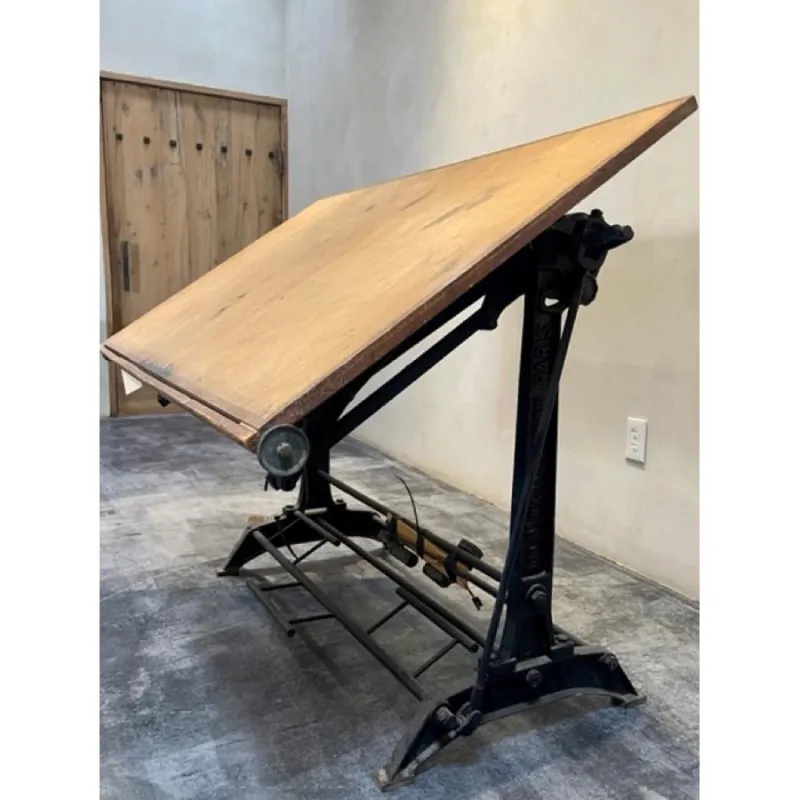
Photo: Black architect drafting table vintage American city skyline 20th century, via a.1stdibscdn.com
Look up at any major American city and you're looking at a puzzle. Skyscrapers, civic halls, housing developments, cultural centers — each one a product of someone's imagination, someone's drafting table, someone's sleepless nights running calculations. But the names attached to those buildings? They tell an incomplete story. A curated one. And for much of the 20th century, that curation had a very deliberate racial logic behind it.
The Black architects who helped design, refine, and in some cases entirely conceive of landmark American structures rarely got their names on the door. Some worked under white firms that claimed full credit. Others were excluded from professional organizations that controlled who got licensed, who got hired, and ultimately who got remembered. The buildings are still standing. The names are mostly gone.
That's the side of architectural history most textbooks skip right over.
Locked Out Before They Could Even Start
To understand how Black architects got erased, you have to start with how hard it was for them to enter the profession at all. The American Institute of Architects, founded in 1857, didn't admit its first Black member until 1945 — nearly a full century after its founding. Without membership, landing commissions from major clients was nearly impossible. Without commissions, building a public reputation was a fantasy.
The few who broke through did so against extraordinary resistance. Robert R. Taylor, who graduated from MIT's architecture program in 1892 and became one of Booker T. Washington's key collaborators at Tuskegee Institute, spent his career designing buildings that shaped an entire campus — and an entire educational philosophy. His work was meticulous, significant, and largely uncelebrated outside of Black academic circles for decades.
Taylor wasn't an exception. He was a template. Talented, credentialed, prolific — and systematically sidelined by an industry that simply didn't want to acknowledge what he and others like him were contributing.
The Art Deco Era's Hidden Hands
The 1920s and 30s were a golden age for American architecture. Cities were going vertical. Ornate facades, geometric boldness, the whole Art Deco moment was exploding across skylines from New York to Chicago to Los Angeles. And quietly, Black designers were in the mix — often working as draftsmen, technical consultants, and junior architects whose contributions dissolved into the credit given to their white superiors.
Julian Abele is one of the more documented cases, though even his story took a long time to reach mainstream audiences. Abele was the chief designer at the prominent Philadelphia firm Horace Trumbauer and is widely believed to have been the primary creative force behind the Philadelphia Museum of Art — yes, the one with the famous steps from Rocky. He also contributed significantly to Duke University's iconic Gothic campus. For most of the 20th century, Trumbauer got the credit. Abele, who was Black and worked during an era of rigid segregation, was largely invisible in the official record.
It wasn't until researchers and historians began digging through original drawings, correspondence, and internal firm documents that Abele's role started to come into focus. The buildings spoke for themselves. Getting the world to listen took considerably longer.
Modernism's Quiet Pioneers
The post-World War II era brought a new architectural language — clean lines, functional spaces, glass and steel — and a new wave of Black architects who were ready to define it. But the structural barriers hadn't gone anywhere.
Paul Revere Williams stands out as someone who managed to carve a remarkable public career despite those barriers. Based in Los Angeles, Williams designed homes for Hollywood celebrities, commercial buildings, and civic structures across Southern California. He became the first Black member of the American Institute of Architects in 1923 and later the first Black fellow. But even Williams had to navigate a deeply uncomfortable reality: many of his white clients were uncomfortable sitting across a drafting table from a Black man. His response was to learn to draw upside down, sketching designs from across the table so clients never had to sit beside him. That detail — practical, dignified, quietly devastating — says everything about the era.
Elsewhere, figures like Hilyard Robinson, who designed Langston University and contributed to New Deal-era public housing projects, were doing serious civic work that shaped communities for generations. The recognition, when it came at all, was muted.
The Institutional Machinery of Erasure
It's tempting to frame this as a story about individual injustice — talented people overlooked by shortsighted gatekeepers. But the erasure was systemic, not accidental. Licensing boards, professional associations, university architecture programs, and major client networks all operated as interlocking systems that kept Black professionals at the margins.
And when the history books were written, they reflected those same hierarchies. The canon of American architecture that got taught in schools, published in coffee table books, and celebrated in museum exhibitions was almost exclusively white. Not because white architects were the only ones building America, but because the institutions that decided what counted as important architecture had a very narrow definition of who counted as an architect.
Reclaiming the Blueprint
The good news — and there is some — is that this is changing. Slowly, imperfectly, but genuinely.
Organizations like the National Organization of Minority Architects (NOMA), founded in 1971, have worked for decades to create professional infrastructure and visibility for Black architects and designers. Academic researchers have been combing through archives, recovering names, and publishing work that fills in the historical record. Museums and cultural institutions have begun mounting exhibitions specifically focused on Black contributions to the built environment.
In 2021, the American Institute of Architects formally apologized for its history of racial exclusion — a gesture that many in the field welcomed as overdue, even if symbolic. More concrete efforts involve updating attribution on historical buildings, incorporating overlooked figures into architecture school curricula, and funding scholarships that address the pipeline problem that still exists today.
Julian Abele now has a plaza named after him at Duke. Paul Revere Williams has a foundation dedicated to his legacy. Robert R. Taylor's contributions to Tuskegee are increasingly part of the broader conversation about American architectural history. These are real reckonings, even if they're happening a century late.
The Skyline Still Has Stories to Tell
Next time you walk through a city — any American city — and look up at something beautiful, something solid, something that feels like it was always meant to be there, consider the full story behind it. The credited architect. The uncredited one. The draftsman whose drawings became someone else's masterpiece. The designer who learned to sketch upside down just to make his clients comfortable.
America's skylines are collaborative in ways the official record rarely admits. And some of the most important collaborators are finally getting their names back.
It's a start.