Dirt Under Their Nails, Credit in Someone Else's Name: The Black Scientists Who Quietly Saved American Agriculture
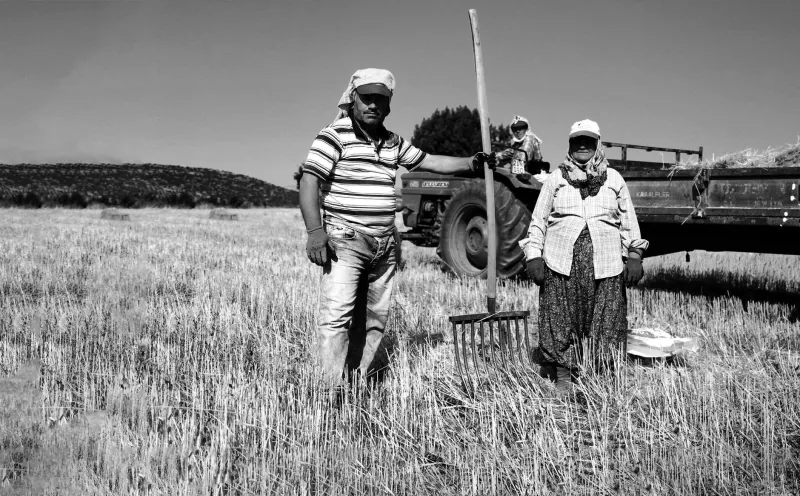
The Fields Were Classrooms Nobody Recognized
There's a version of American agricultural history that reads like a clean, institutional story. Government programs, land-grant universities, extension offices rolling out into rural counties with pamphlets and good intentions. It's tidy. It's also missing a few hundred people whose hands actually figured out how to make exhausted Southern soil produce food again.
The story of Black agricultural science in America isn't a footnote. It's the whole chapter that got quietly removed before the book went to print.
After the Civil War, the South's farmland was in rough shape. Decades of cotton monoculture had stripped the soil of nitrogen and organic matter. Yields were collapsing. Sharecroppers — the majority of them Black — were farming land that was barely cooperating. The solutions that eventually pulled American agriculture out of that spiral didn't emerge from a boardroom or a federal agency. They came from people who had no choice but to innovate because survival depended on it.
George Washington Carver Was Just the Beginning
Most Americans, if they know one name from this story, know George Washington Carver. And sure, Carver deserves his flowers — his work at Tuskegee Institute on peanuts, sweet potatoes, and crop diversification was genuinely transformative. But the way history has told his story has a funny side effect: it makes him look like a lone genius operating in isolation, which lets everyone else off the hook for not knowing who came next, or who was working alongside him.
Take Thomas Monroe Campbell, who spent decades as the first Black agricultural extension agent in the country, traveling through Alabama and Georgia with a demonstration wagon, teaching farmers — Black farmers who were largely shut out of the formal extension system — practical techniques in soil management, livestock care, and food preservation. Campbell translated scientific research into language that sharecroppers could actually use, working in communities that the official USDA extension network was specifically designed to exclude. His wagon covered thousands of miles. His name appears in almost no mainstream agricultural history.
Or consider the collective knowledge embedded in what historians sometimes call "freedom farms" — small plots cultivated by formerly enslaved people who brought with them centuries of agricultural understanding developed under brutal conditions. The crop rotation systems, the companion planting strategies, the knowledge of which native plants could fix nitrogen in the soil — this wasn't folk wisdom operating separately from science. It was applied ecology, developed empirically over generations.
When the System Took the Method and Lost the People
Here's where the erasure gets systematic rather than accidental. As the USDA expanded its research apparatus in the early twentieth century, and as land-grant institutions began publishing findings on sustainable soil management and diversified cropping, the intellectual lineage of those methods got blurred. Research conducted at Black institutions like Tuskegee and Prairie View A&M fed into a broader national conversation about agricultural reform — but the attribution often stopped at the institutional level, and Black institutions were rarely credited even at that level.
There were also direct cases of appropriation. Black farmers who had developed specific pest management techniques, particularly around boll weevil control in cotton country, found those techniques documented by white extension agents, published in federal bulletins, and disseminated without any acknowledgment of where the knowledge originated. The farmers who'd worked it out through years of trial and error on their own plots didn't receive compensation, credit, or even recognition in the literature that spread their methods across the country.
Matthew Henson Walton — not the Arctic explorer, a different man entirely — spent the 1920s and 1930s developing early integrated pest management strategies in Mississippi, working through a network of Black farming cooperatives. His work on beneficial insect populations and natural predator cycles predated what agricultural scientists would later formalize as IPM by several decades. The cooperatives kept records. The records didn't make it into the canonical literature.
Fannie Lou Hamer and the Politics of the Soil
By the 1960s, the erasure had taken on a more explicitly political dimension. Fannie Lou Hamer is remembered primarily as a voting rights activist, and that legacy is enormous. But her work founding Freedom Farm Cooperative in Sunflower County, Mississippi in 1969 was also a direct act of agricultural science and community food systems design.
Hamer understood that land access and food sovereignty were inseparable from political power. The cooperative grew to farm over six hundred acres, developed pig banks and vegetable programs to address food insecurity, and created a model of community-supported agriculture that predated the mainstream CSA movement by twenty years. When the CSA model became fashionable in white progressive food circles in the 1980s and 1990s, Freedom Farm's precedent was rarely part of the conversation.
The same pattern holds for the Federation of Southern Cooperatives, founded in 1967, which spent decades preserving Black-owned farmland and developing sustainable agriculture practices across the Deep South. Their technical innovations in small-scale sustainable farming informed practices that would later become central to the organic and regenerative agriculture movements — movements that, in their mainstream iterations, have not always been great at telling that part of the story.
Why It Still Matters What the Textbooks Say
This isn't purely a historical grievance. The agricultural challenges facing the United States right now — soil degradation, water management, the transition away from industrial monoculture toward more resilient farming systems — are exactly the problems that Black agricultural scientists and farmers spent generations solving under impossible conditions.
When the solutions are presented as new discoveries emerging from research universities and Silicon Valley agtech startups, it does two things simultaneously: it misrepresents the intellectual history of the field, and it cuts off access to a deep reservoir of practical knowledge that exists in communities, in oral traditions, in the records of cooperatives and extension programs that never got their due.
The soil doesn't care who gets the credit. But the people who worked it, who figured out how to make it give back what it could, who fed a nation that largely refused to acknowledge them — they deserve to be part of the story we tell about how American agriculture actually works.
The side story here isn't a minor detail. It's the foundation everything else was built on.