Borrowed Without Permission: The Indigenous Healers Whose Centuries of Knowledge Became Someone Else's Medical Breakthrough
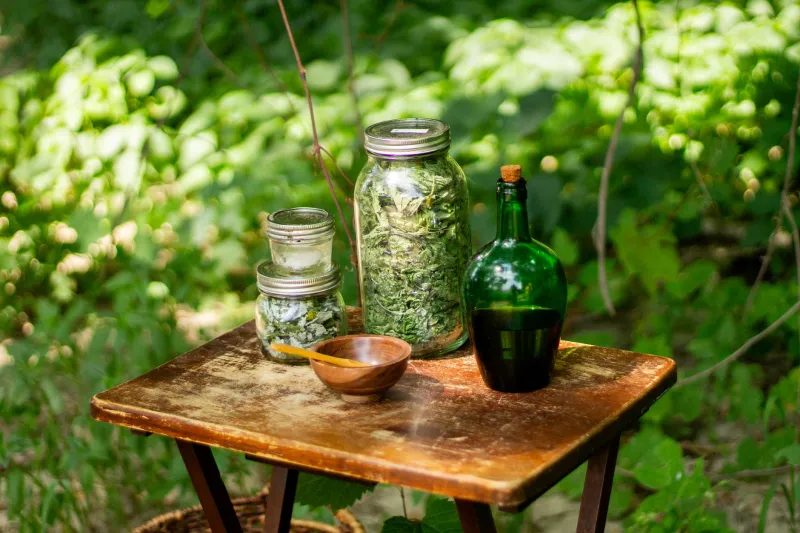
Somewhere in a medical school library, there's a textbook explaining how a particular bark compound revolutionized pain management in the nineteenth century. The chapter probably credits a European botanist. It almost certainly doesn't mention the Haudenosaunee women who had been using that same compound for generations before he ever set foot on the continent.
This is not an isolated oversight. It is, depending on how charitable you're feeling, either the most successful act of intellectual theft in American history or the longest-running case of academic amnesia ever recorded. Either way, the result is the same: modern medicine is built on a foundation of Indigenous knowledge that it has never once stopped to properly acknowledge.
The Original Pharmacopeia Nobody Talks About
When European settlers arrived in North America, they didn't come equipped with a superior medical tradition. In many ways, they came with an inferior one. Bloodletting was still fashionable. Infection was poorly understood. Surgical mortality rates were grim by any standard. What they encountered instead — in the communities they were simultaneously trying to displace — was a sophisticated, field-tested body of medical knowledge developed over thousands of years.
Indigenous healers across the continent had catalogued hundreds of plant-based treatments. The Cherokee used echinacea to treat infections and wounds long before it appeared in any European pharmacological record. The Haudenosaunee employed white willow bark — the natural precursor to aspirin — for fever and pain. Tribes across the Great Lakes region had developed treatments for scurvy using vitamin C-rich plants at a time when European sailors were still dying of the disease on transatlantic crossings.
These weren't folk remedies stumbled upon by accident. They were the result of generations of careful observation, refinement, and transmission through dedicated practitioners who spent lifetimes mastering their craft. The knowledge was systematic. It was just never written down in a way that European institutions recognized as legitimate — which made it extraordinarily easy to take.
How the Transfer Actually Happened
The mechanics of the knowledge transfer were rarely dramatic. There was no single moment of theft to point to. Instead, it happened gradually, through a combination of proximity, desperation, and institutional convenience.
Early colonial physicians were often in over their heads. They were practicing in unfamiliar climates, treating diseases they didn't fully understand, and watching their standard treatments fail with alarming regularity. Indigenous healers, by contrast, knew the local landscape intimately. Colonists who survived their first brutal winters frequently did so because someone in a nearby community showed them what to eat, what to apply to frostbite, and which plants could fight infection.
Physicians took notes. They brought samples back to settlements. They wrote letters to colleagues in Europe describing remarkable treatments they had "discovered" in the wilderness. The healers who taught them those treatments rarely received so much as a name-check.
By the time the American medical establishment began formalizing its practices in the eighteenth and nineteenth centuries, the laundering was nearly complete. Indigenous treatments had been reframed as European discoveries, categorized under Latin nomenclature, and published in journals that Indigenous practitioners could not access, contribute to, or correct.
Specific Cases the History Books Skipped
Take the history of wound care. Long before antiseptic technique became standard in Western surgery, numerous Indigenous nations were using preparations derived from plants with genuine antimicrobial properties. The Ojibwe used usnea lichen — which contains usnic acid, a compound with documented antibacterial effects — to treat wounds. Physicians who encountered these methods in the field often adopted them quietly, then attributed improved outcomes to their own clinical instincts.
Or consider the history of contraception and reproductive medicine. Several Indigenous communities across the continent had developed effective plant-based contraceptive methods that were documented by missionaries and physicians in the seventeenth and eighteenth centuries. Some of those compounds later contributed to the development of modern hormonal contraceptives. The ethnobotanical trail connecting them to their Indigenous origins exists in the academic literature — but you have to go looking for it, because it doesn't appear in the standard histories of reproductive medicine.
Then there's the matter of surgical technique. The Aztec medical tradition, which Spanish conquistadors encountered and documented in the sixteenth century, included procedures for wound closure, fracture treatment, and even rudimentary cranial surgery that impressed even hostile European observers. Those observers wrote detailed accounts. Those accounts circulated among European physicians. The influence on subsequent European surgical development is real and traceable. The attribution is essentially nonexistent.
The Institutional Machinery That Made Erasure Easy
None of this happened in a vacuum. The erasure of Indigenous medical knowledge was made possible — and in some ways inevitable — by the same institutional structures that were simultaneously dispossessing Indigenous peoples of their land and political autonomy.
Medical licensing systems that emerged in the United States during the nineteenth century were explicitly designed to professionalize the field by excluding practitioners who operated outside European academic frameworks. Indigenous healers, no matter how skilled or knowledgeable, were categorized as folk practitioners at best and dangerous charlatans at worst. Their methods could be extracted and repurposed by credentialed physicians, but they themselves could not participate in the emerging medical establishment on equal terms.
Academic publishing compounded the problem. Knowledge that wasn't recorded in European-style written form was treated as unverified, regardless of how long it had been in practice or how well it worked. This created a convenient asymmetry: Indigenous knowledge was available for appropriation because it wasn't "formally" documented, and Indigenous practitioners couldn't formally document it because they were excluded from the institutions that conferred that kind of legitimacy.
What Reclamation Looks Like
There are researchers today — many of them Indigenous themselves — working to reconstruct the intellectual lineage that medical history chose to ignore. Ethnobotanists, medical historians, and Indigenous health scholars have spent decades tracing specific treatments back to their origins, documenting the transfer of knowledge, and making the case that proper attribution is not just an academic nicety but a matter of basic historical honesty.
Some pharmaceutical companies have begun engaging in benefit-sharing agreements with Indigenous communities whose traditional knowledge contributed to profitable drugs. It's a start, though critics point out that it often amounts to a negotiated settlement for something that should never have been taken without consent in the first place.
More meaningfully, Indigenous-led health initiatives across the country are actively working to reclaim and revitalize traditional healing practices on their own terms — not as supplements to Western medicine, but as complete systems of knowledge with their own internal logic, history, and authority.
The Story Medicine Keeps Refusing to Tell
The version of medical history most Americans learned in school is one of linear European progress — from ancient Greece through the Renaissance through the Enlightenment, arriving triumphantly at modern medicine. It's a clean narrative. It's also missing an enormous amount of the actual story.
The treatments that saved lives, the plant compounds that became pharmaceuticals, the surgical insights that were quietly absorbed into mainstream practice — these things didn't emerge from nothing. They came from people who had been studying the natural world, the human body, and the relationship between them for centuries before any European physician arrived to take credit.
The side story here isn't really a side story at all. It's closer to the main event. Modern American medicine is, in no small part, Indigenous medicine — just published under different names, in different languages, by people who never acknowledged where they learned it.