The Stage Was Theirs, But the Credit Never Was: Black Designers Who Built Broadway's Greatest Illusions
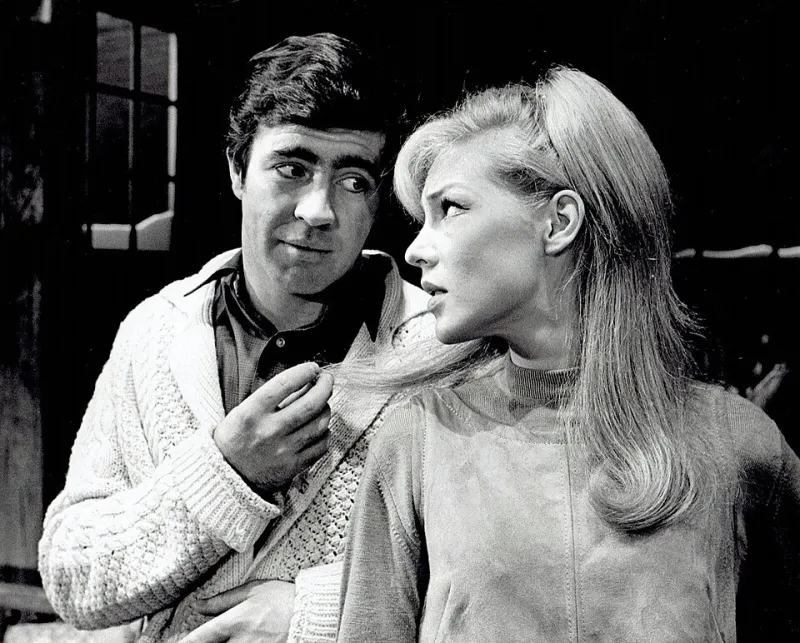
Photo: Samuel Lurie, Public domain, via Wikimedia Commons
When the curtain went up on Broadway's golden era — roughly from the early 1950s through the mid-1970s — audiences gasped at what they saw. Elaborate painted backdrops that seemed to breathe. Lighting that could make a performer look like they were standing inside a sunset. Mechanical set pieces that transformed a bare stage into a Paris café, a Mississippi riverbank, a crowded tenement stairwell. People called it magic.
It wasn't magic. It was labor. Skilled, visionary, technically demanding labor. And a significant portion of it came from Black designers, builders, and engineers whose contributions were quietly, systematically buried — not by accident, but by the architecture of an industry that had very specific ideas about whose name deserved to be printed.
What the Playbill Didn't Print
Here's something worth knowing about how Broadway programs worked during this period: credit allocation wasn't just about recognition. It was about money, union standing, and future work. The people listed in the playbill were the people who got rehired. They were the people whose careers compounded. Everyone else — regardless of how central their work was — remained invisible by design.
Black theatrical workers during the 1950s and '60s faced a layered system of exclusion. Many unions governing Broadway crafts were either formally segregated or operated informal exclusion practices that kept Black workers off the books, off the roster, and off the credit lines. You could do the work. You just couldn't own it publicly.
This wasn't unique to Broadway, of course. But theater has a particular kind of institutional amnesia. Film has frames you can trace back. Music has recordings. Theater, by nature, disappears the moment the run ends. What survives is documentation — reviews, programs, union records, oral histories. And when those systems were built to exclude certain people, the historical record reflects that exclusion as if it were natural.
Lighting the Invisible Room
Lighting design is probably the least understood craft in theater, even among people who love it. A great lighting designer doesn't just illuminate the stage — they sculpt it. They decide what you see and what you don't. They create emotional temperature. They make a performer's face do things the actor alone can't accomplish.
During Broadway's postwar boom, lighting as a distinct design discipline was still being formalized. The technology was evolving fast — from basic incandescent rigs to more sophisticated dimmer systems and eventually early computerized boards. This was a moment when expertise was being built in real time, and a lot of that expertise lived in the people doing the physical work: the electricians, the board operators, the stagehands who understood the equipment better than the designers who got the credit.
Several Black electricians and technical crew members from this era are documented — if at all — only in union grievance files or in the recollections of colleagues who were interviewed decades later for academic theater histories. Their aesthetic contributions, the choices they made in the moment when a designer wasn't in the room, the problems they solved that nobody wrote down — those are largely gone.
The Set Builders Who Shaped the Spectacle
Scenic construction during Broadway's golden age was a brutally physical craft. Shops in the West 30s and 40s around the theater district employed dozens of workers building the flats, platforms, drops, and mechanized pieces that made shows like The King and I, West Side Story, and Fiddler on the Roof visually iconic. Black craftsmen worked in many of these shops, particularly in roles that required the most technical skill — welding, rigging, complex carpentry.
What's striking, when you dig into the oral histories that do exist, is how often these workers describe contributing design ideas that were absorbed upward. A carpenter suggests a modification to a turntable mechanism. A rigger figures out how to fly a piece of scenery in a way that's faster and safer than what was originally spec'd. These contributions didn't just solve problems — they shaped the final visual product. But in a hierarchy where design credit flowed only to the named designer, those contributions evaporated from the record.
The late scholar and theater historian Glenda Dickerson wrote extensively about the way Black labor was embedded in American theater production while being simultaneously erased from its mythology. Her work, along with researchers like Lundeana Thomas, has helped recover some of these narratives — but recovery work is slow, and the mainstream theater press has been sluggish to integrate these findings into how it talks about Broadway's legacy.
Why This Matters Now
Broadway in 2024 is having a genuine reckoning with its own history. The conversations about diversity in casting that dominated the 2010s have slowly expanded to include the design and technical side — where, frankly, the numbers are still pretty stark. A 2023 report from the Broadway League found that designers of color remain significantly underrepresented in credited design roles across scenic, lighting, and costume categories.
But the historical erasure matters for a reason beyond representation statistics. When you remove certain people from a craft's origin story, you distort how that craft understands itself. You lose lineages. Young Black designers today who are trying to find their forebears in the history of their field often come up empty — not because those forebears didn't exist, but because the documentation was never built to hold them.
There's also a financial dimension that rarely gets discussed. Design credit in Broadway's golden age translated directly into royalties and residual payments when shows were revived or licensed for regional productions. The people who weren't credited didn't receive those payments. The erasure wasn't just symbolic — it was economic.
The Work of Remembering
Some recovery is happening. Theater archives at institutions like the New York Public Library for the Performing Arts hold materials that researchers are still working through. Oral history projects have captured testimony from elderly technical workers who were there. A handful of documentary projects have tried to reconstruct specific production histories with more inclusive attribution.
But there's a ceiling on how much can be recovered when the original systems weren't designed to create a record in the first place. Some of these stories are simply gone. What remains is the work itself — the design vocabulary, the technical innovations, the aesthetic sensibilities that shaped Broadway's visual language and filtered down into regional theater, film production design, and live event staging for decades afterward.
The spectacle that made Broadway legendary didn't emerge from the credited names alone. It came from a much larger, more diverse community of artists and craftspeople who built it with their hands, their eyes, and their expertise — and then watched someone else take a bow.
The curtain came down. The names faded. But the work is still there, embedded in every show that followed, waiting for someone to trace it back to the people who made it possible.