They Took the Fall So She Could Take the Bow: The Stunt Women Hollywood Kept Off the Poster
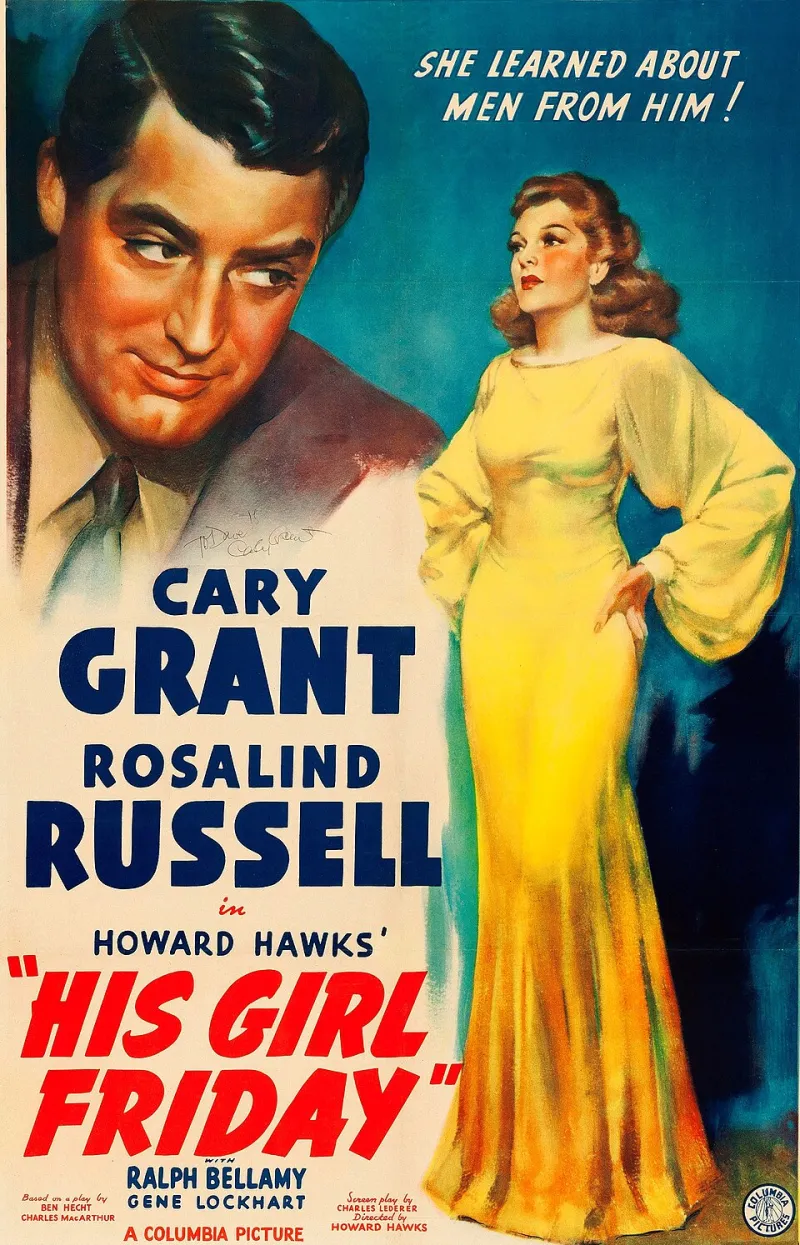
Photo: "Copyrighted by Columbia Pictures Corp, New York, N. Y. 1939", Public domain, via Wikimedia Commons
There's a scene in a 1970s action film — you've probably seen something like it — where the heroine launches herself off a moving vehicle, hits the pavement at forty miles an hour, rolls twice, and comes up running. The audience cheers. The actress gets the magazine cover. And somewhere just off camera, a woman nobody's ever heard of is quietly icing her shoulder and hoping the check clears before the next job.
Hollywood has always sold us illusions. But one of its longest-running cons wasn't a special effect — it was the systematic erasure of the women who made those illusions possible.
The Job Nobody Wanted to Talk About
Stunt work in early Hollywood was chaotic, dangerous, and almost entirely unregulated. Women were doing it from nearly the beginning. Silent-era performers like Helen Gibson were taking genuine risks — riding horses at full gallop, leaping between moving trains — in an era before crash mats, safety cables, or anything resembling a medical protocol on set.
Gibson, who took over the lead role in the Hazards of Helen serial in 1915, wasn't just a pretty face filling in for another actress. She was the action. She trained obsessively, negotiated her own deals, and performed sequences that would make modern stunt coordinators nervous. But "stunt performer" wasn't even a real job title yet. It was just something women did between takes, often without extra pay, and almost never with credit.
That pattern — perform the danger, forfeit the recognition — would define the profession for the better part of a century.
The Double Standard Built Into the System
Here's where it gets complicated, and honestly, a little infuriating. By the mid-twentieth century, male stunt coordinators had turned their craft into a genuine career track. Names like Yakima Canutt became legendary. Studios paid attention. The work was respected, if not exactly glamorized.
For women, the math was different. Female stunt performers were often "doubled" not just for the star they were replacing, but sometimes by male stunt performers in wigs and padded costumes — a practice that was cheaper and, in the logic of the era, apparently more acceptable than acknowledging that women could handle the work themselves. When the scene called for a woman to take a hit, Hollywood's first instinct was often to put a man in a dress before hiring a trained woman who'd been doing exactly that kind of work for years.
For the women who did get hired, the billing situation was almost universally dismal. Stunt coordinators — overwhelmingly male — received on-screen credit. Stunt performers, especially women, frequently did not. The institutional memory of the industry credited the person who planned the sequence, not necessarily the person who actually bled for it.
Jeannie Epper and the Long Road to Being Seen
If there's a name that anchors this story, it's Jeannie Epper. Over a career spanning more than four decades, Epper doubled for some of Hollywood's biggest stars, most famously Lynda Carter on Wonder Woman in the 1970s. She did it all — high falls, car work, wire rigging, fights — and she did it at a level that her male colleagues openly respected, even when the industry's structures didn't reflect that.
Epper was vocal about the disparities. She talked openly about the wage gap between male and female stunt performers, the lack of advancement opportunities for women into coordinator roles, and the quiet frustration of watching men build careers on the backs of work that women had been doing just as well, often for less money and zero recognition.
"We were invisible," she told interviewers more than once, in various forms. "We did the work and we disappeared."
She wasn't alone in saying it. Stuntwomen like Donna Evans, Julie Johnson, and Debbie Evans (Jeannie's daughter, who became one of the most celebrated stunt drivers in the business) each had versions of the same story: incredible skill, genuine danger, and a career-long battle against an industry that saw them as a line item rather than a legacy.
When the Industry Finally Blinked
Change, when it came, came slowly and largely because the women themselves forced it. The Taurus World Stunt Awards, launched in 2001, created at least a formal space where stunt work could be recognized publicly — including a category specifically for women. It wasn't a revolution, but it was a crack in the wall.
More significant was the gradual shift in who got to sit at the coordinator's table. For most of Hollywood history, the pathway from stunt performer to stunt coordinator — the person who designs sequences, hires the team, and gets the screen credit — was almost exclusively male. Women who'd spent twenty years in the field were routinely passed over for coordinator roles in favor of men with less experience. That pipeline problem didn't fix itself overnight, but women like Shauna Duggins and Zoe Bell began breaking through into coordinator and second-unit director roles in ways that simply hadn't happened before.
Bell's trajectory is particularly worth noting. A New Zealand stuntwoman who doubled Uma Thurman in the Kill Bill films, she was essentially put front and center by Quentin Tarantino in Death Proof — a film that, whatever its other qualities, made her visible in a way the industry had long resisted doing for women in her position.
The Credit Problem Isn't Just Symbolic
It's tempting to frame the billing issue as a matter of ego or pride, but the stakes are higher than that. In Hollywood, credit is currency. It determines who gets hired for the next job, who gets the rate increase, who gets considered for the coordinator role, and ultimately who gets to build a career versus who cycles out of the industry after their body can't take it anymore.
Stunt work is physically brutal. Performers absorb injuries that accumulate over years. The women who spent decades doing this work — often without the same support infrastructure their male counterparts had access to — did so without the career rewards that might have made those sacrifices feel like a fair exchange. They took the falls. They wore the bruises home. And when the credits rolled, their names frequently weren't there.
The Side of the Story Worth Remembering
Hollywood loves its origin myths. The rugged leading man. The visionary director. The producer who took a chance. What it's less comfortable with is the idea that some of its most iconic moments were made possible by women whose names never appeared on a single poster.
The stunt women who built the action genre — who perfected the craft, trained the next generation, and pushed for the safety standards that eventually made sets less lethal — deserve more than a footnote. They deserve the actual story.
Because every time a stunt goes perfectly, every time a sequence looks effortless, every time an audience gasps and then exhales in relief — there's a very good chance a woman made that happen. She just didn't get to take the bow.