The Silent Stars Nobody Talks About: How Deaf Performers Invented Modern Comedy
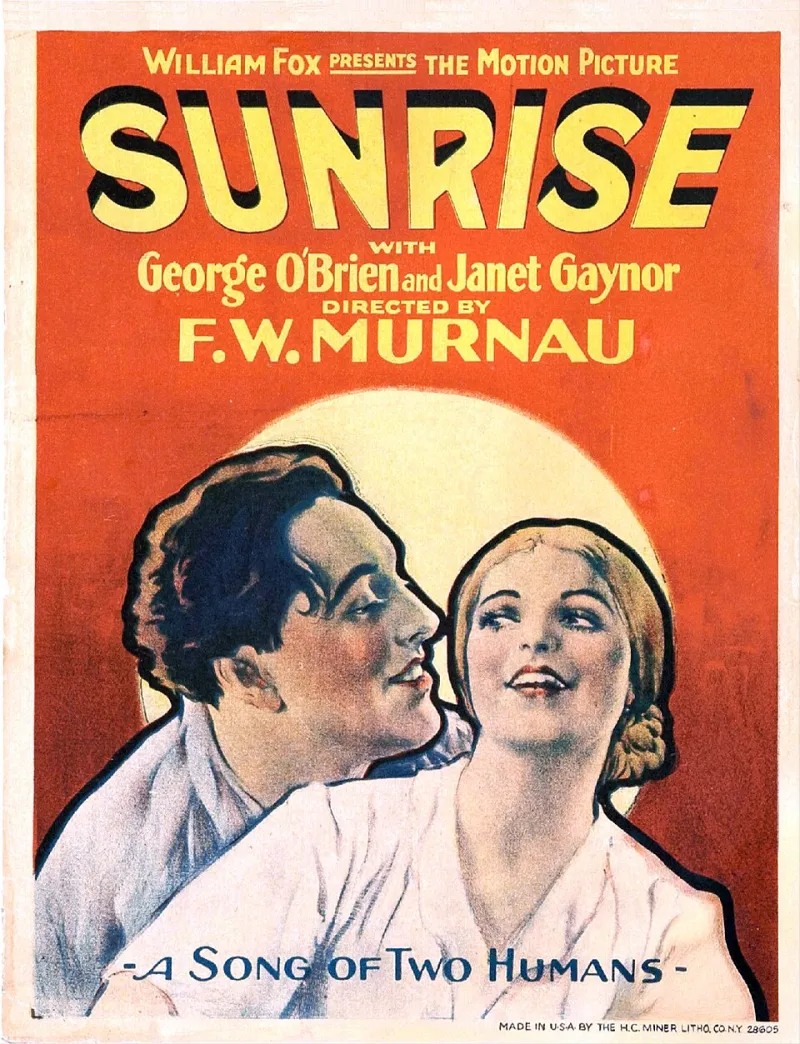
Photo: H.C Miner Litho Co., Public domain, via Wikimedia Commons
Here's a question film school professors rarely ask: if silent cinema was a visual medium built entirely on physical expression, who better to master it than people who had spent their whole lives communicating through exactly that?
The answer, inconveniently for Hollywood's official mythology, is deaf and hard-of-hearing performers — a generation of artists who were genuinely extraordinary at the craft that silent films demanded, and who got quietly pushed out of the industry the moment a microphone entered the room.
A Language Hollywood Didn't Know It Was Speaking
Silent film comedy wasn't just actors flailing around for laughs. At its best, it was a highly sophisticated visual language — every twitch of the eyebrow, every shift in posture, every perfectly timed stumble carrying emotional weight that dialogue couldn't. For performers raised in Deaf communities, that language wasn't a performance technique. It was home.
Deaf actors in the early 1900s came into silent film with a fluency in visual storytelling that hearing actors spent years trying to develop. American Sign Language and the broader culture around it had already built an entire aesthetic framework for communicating nuance without sound. Expressions were precise. Body language was intentional. Timing — the heartbeat of any good comedy — was everything.
What looked like natural talent to studio executives was actually a lifetime of practiced visual literacy. And for a brief, glittering window in film history, that literacy made deaf performers some of the most compelling people on screen.
The Names We Should Know
Most people can rattle off Chaplin, Keaton, Harold Lloyd. Fewer can name Granville Redmond.
Redmond was a celebrated California landscape painter who also happened to be deaf, and who appeared in several Charlie Chaplin films in the 1910s and 1920s. The two men were close friends — Chaplin reportedly spent significant time at the California School for the Deaf, absorbing the physical expressiveness he watched Redmond and others use in everyday life. Chaplin himself acknowledged Redmond's influence, though that acknowledgment never quite made it into the popular history of cinema.
Then there's Emerson Romero, a Cuban-American deaf actor who worked steadily through the silent era and later attempted something remarkable: he physically re-edited silent films himself, adding intertitles in ways that made them more accessible to deaf audiences. When the industry moved on, Romero tried to build the accessibility infrastructure that Hollywood refused to provide. He did it largely alone, largely uncredited, and largely forgotten.
These weren't fringe figures scraping for bit parts. They were working professionals with real screen presence, real fanbases, and real craft. The industry just decided their resumes had an expiration date.
When "Progress" Became a Pink Slip
The Jazz Singer dropped in 1927, and everything changed — not gradually, but with the sudden brutality of a door slamming shut.
Sound technology was sold to the public as pure advancement, a gift of modernity. And for many audiences, it genuinely was exciting. But inside the industry, the transition to talkies functioned as a quiet purge. Performers with accents got cut. Performers whose voices didn't match their screen image got cut. And deaf performers, who had no particular stake in whether a film had a soundtrack or not, got cut too — because the new machinery of Hollywood had decided that a performer who couldn't hear the director's audio cues on set was a liability.
Never mind that they'd been performing brilliantly without those audio cues for decades. Never mind that the entire skill set the industry had just spent thirty years developing — visual storytelling, physical comedy, expressive mime — was suddenly being abandoned in favor of people standing relatively still and delivering lines into a microphone.
The ableism wasn't loud or dramatic. It didn't announce itself. It just quietly restructured what "bankable" meant, and deaf performers fell outside the new definition.
What Got Lost in the Transition
Here's the part that should genuinely bother anyone who loves film: we don't actually know the full extent of what deaf performers contributed to early cinema, because the historical record was never built to preserve it.
Film historians have focused obsessively on the directors, the studios, the stars whose names still sell retrospectives. The supporting ecosystem — the character actors, the bit players, the performers who showed up on set and made the leads look better — has always been under-documented. Deaf performers existed largely in that ecosystem, and so their contributions got swallowed by the same neglect that swallowed everyone else in the margins.
What we're left with is a lot of inference. We know Chaplin spent time in Deaf communities. We know his physical comedy has qualities that align remarkably well with ASL's aesthetic principles — the economy of gesture, the expressiveness of stillness, the way meaning builds through accumulation rather than declaration. We know Keaton's famously impassive face reads differently when you understand it through the lens of Deaf performance culture, where a controlled expression communicates volumes precisely because it's controlled.
But "we know" isn't the same as "the history books say." And the history books, by and large, built the Chaplin and Keaton mythology without footnoting where some of those ideas actually came from.
Accessibility as an Afterthought, Then and Now
There's a particular irony in the fact that silent films — the format deaf performers thrived in — are actually one of the most naturally accessible formats in cinema history. No soundtrack required. No dialogue to miss. The story lives in the image.
And yet even within that format, the industry never framed accessibility as a value. Deaf performers weren't celebrated for bringing a unique perspective to a visual medium. They were tolerated as long as the medium happened to suit them, and discarded the moment it didn't.
That pattern didn't end in 1927. The conversation around deaf actors in Hollywood — Marlee Matlin winning an Oscar in 1987, the recent visibility of performers from the CODA and Deaf community following the success of films like the one that shares that name — keeps circling back to the same basic argument: that deaf performers bring something specific and irreplaceable to their work, and that the industry keeps having to be reminded of that fact.
The silent era performers were making that argument with their bodies, on screen, a hundred years ago. Hollywood just wasn't listening — which, given the context, lands somewhere between tragic and absurd.
The Side Story Worth Recovering
Film history loves a clean origin story. Genius auteur has vision, vision becomes classic, classic becomes legend. It's a satisfying narrative, and it's almost always incomplete.
The real history of silent comedy is messier and more interesting than the textbook version. It includes deaf performers who were fluent in a visual language before the cameras ever rolled. It includes friendships and influences that crossed lines of hearing and Deaf culture in ways that shaped the entire aesthetic of an art form. It includes people like Romero, quietly building accessibility tools in his spare time because nobody else was going to do it.
None of that makes Chaplin less funny or Keaton less brilliant. It just means the story is bigger than we've been told — which, honestly, is almost always the case.