The Name on the Label Isn't Always the Hand That Made It
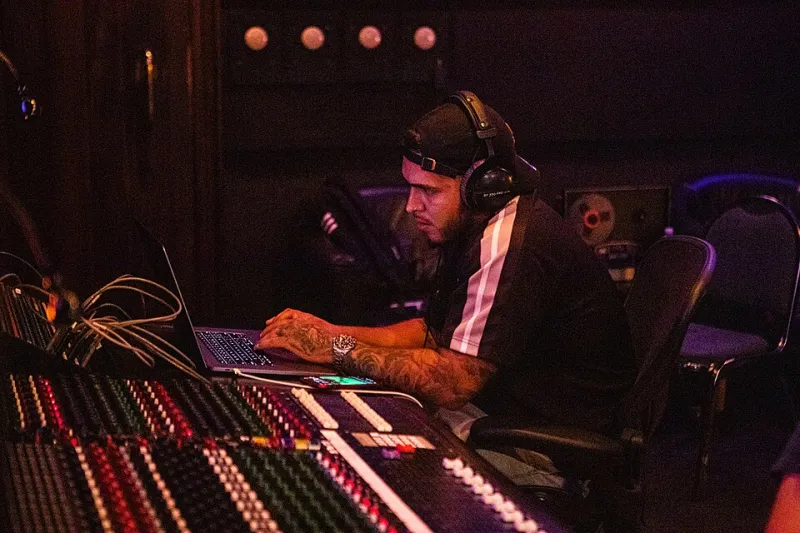
Photo: Goldenages417, CC0, via Wikimedia Commons
Pop music loves a good origin story. The scrappy kid from nowhere who wrote a song in their bedroom, got discovered, and changed the world. It's a beautiful narrative. It's also, more often than not, only part of the truth.
Because behind a staggering number of the songs you've hummed in the shower, belted out at weddings, or cried to on a long drive, there's someone else. Someone who built the beat, shaped the melody, or quietly handed over the entire track — and then stepped back into the dark while somebody else walked into the spotlight.
Welcome to the side story that the music industry has been telling for decades.
The Motown Blueprint
Long before the term "ghost producer" entered the pop culture vocabulary, Motown Records was running one of the most sophisticated — and deliberately obscured — creative operations in American music history. The Funk Brothers were the house band stationed in a basement studio on West Grand Boulevard in Detroit, and they played on virtually every Motown hit from the early 1960s through the early 1970s. We're talking about the backbone of songs by Marvin Gaye, The Supremes, Stevie Wonder, and The Temptations.
These were world-class musicians. James Jamerson's bass lines are still studied in conservatories. Benny Benjamin's drumming influenced generations of players. And yet, for most of their careers, their names appeared nowhere on the records they made famous. Motown's label policy kept session musicians anonymous, partly to maintain the mystique of its star artists and partly because, well, that's just how the industry worked back then.
The Funk Brothers' story finally got its long-overdue reckoning in the 2002 documentary Standing in the Shadows of Motown, but by then, many of them had died without seeing a fraction of the recognition — or royalties — they deserved. The documentary's title says everything about how the system was designed to work.
The Arranger Problem
There's another layer to this that gets even less airtime: the arranger. If the songwriter writes the words and melody, and the producer shapes the sound, the arranger is the person who figures out how all the instruments should actually talk to each other. They're the ones who decided that the strings should swell right before the chorus, or that the brass section should drop out entirely to let the vocal breathe.
Quincy Jones is one of the rare arrangers who became a household name, largely because his work with Michael Jackson was so undeniable that hiding it became impossible. But for every Quincy Jones, there are dozens of arrangers who shaped the sonic landscape of American pop without ever getting a mention on the album cover or a shoutout in an acceptance speech.
Burt Bacharach's legendary collaborations leaned heavily on arrangers whose contributions blurred into his own celebrated genius. Phil Spector's "Wall of Sound" was as much a product of the Wrecking Crew — another anonymous collective of elite session musicians — as it was his own vision. These weren't just hired hands filling in parts. They were co-architects of something that defined an era.
The Modern Ghost Economy
Fast forward to today, and the machinery is more sophisticated but the dynamic is surprisingly familiar. The rise of electronic dance music and hip-hop production created an entire ecosystem of ghost producers — people who build complete, release-ready tracks and sell them outright to artists who then perform and promote them as their own work.
In the EDM world, this is an open secret that occasionally breaks into the open. Swedish House Mafia co-founder Steve Angello once admitted that ghost production was rampant in the scene. Several high-profile DJs have faced credible accusations of purchasing tracks wholesale and releasing them under their own names. The fans in the crowd have no idea. The festival organizers don't particularly care. The ghost producer cashed a check and moved on to the next one.
The streaming era has made this even more complicated. Because now the financial stakes are tied directly to a name — your Spotify following, your playlist placements, your social media presence. The brand is the product. And building a brand takes time that a lot of working musicians simply don't have. So the market for ghost production has quietly exploded, with platforms and private networks connecting artists who need content with producers who need income.
Some producers are perfectly fine with this arrangement. They get paid upfront, avoid the exhausting business of self-promotion, and move freely between projects. Others chafe at it. They watch someone else accept a Grammy for a song they wrote in an afternoon, and they do the math on what recognition might have meant for their career.
The Credit Conversation
There are signs that the conversation is shifting, even if slowly. The Recording Academy has made incremental moves toward more inclusive crediting practices. Some artists — Beyoncé is frequently cited as an example — have made a point of including extensive credits that acknowledge collaborators who might otherwise go unmentioned. Taylor Swift's meticulous co-writing credits have helped normalize the idea that collaborative songwriting is the rule rather than the exception.
But the structural incentives haven't changed all that much. Record labels still benefit from the simplicity of a single marketable identity. Streaming platforms algorithmically reward names with established followings. And the mythology of the lone creative genius — the artist who makes something from nothing — is still enormously powerful in pop culture. It sells tickets. It sells merchandise. It sells the story.
The ghost producer, the session musician, the arranger — they're not victims in a simple morality tale. Many of them made choices, signed contracts, and took money in exchange for anonymity. The picture is genuinely complicated. But complicated doesn't mean unimportant.
Who Gets to Own the Story?
There's something almost philosophical at the heart of this. Music is one of those art forms where the line between creation and performance has always been blurry. Opera singers don't compose their arias. Broadway stars don't write their own book and lyrics. We've never expected performers to be the sole source of everything they deliver.
But pop music sold us a different mythology — one where authenticity meant doing it yourself, where the voice and the song and the soul behind it were supposed to be inseparable. That mythology made the industry billions of dollars. It also made it very convenient to keep certain people out of the frame.
The Funk Brothers played on more number-one hits than the Beatles, the Rolling Stones, Elvis Presley, and the Beach Boys combined. Read that sentence again.
That's not a footnote. That's the story.