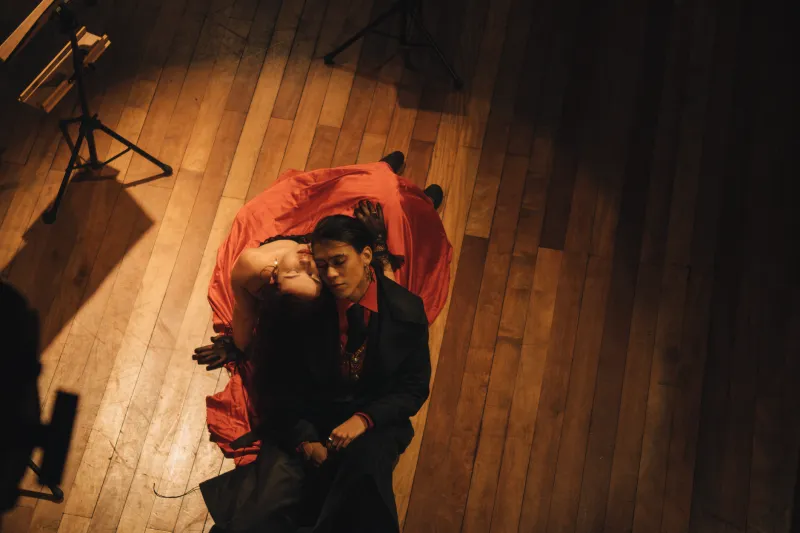
Every Move They Made Was Someone Else's Signature
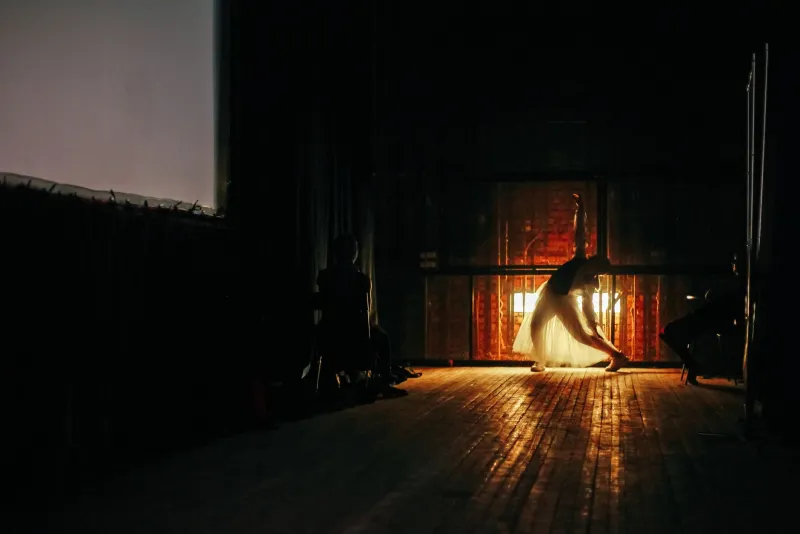
There's a particular cruelty in being brilliant at something you're not allowed to be seen doing.
Not physically invisible — these dancers were very much onstage, under the lights, in front of fifty thousand people. But professionally, personally, existentially invisible. Their names weren't in the program notes that mattered. Their relationships weren't mentioned in the Rolling Stone profile. Their community wasn't something their employers wanted associated with the brand.
And yet the brand was, in ways that are only now becoming easier to talk about, entirely theirs.
The Architecture of a Show
When you watch footage of a major pop concert from the 1980s or 1990s — the kind of production that set the template for everything that came after — what you're seeing is a constructed visual world. The movement vocabulary, the formation patterns, the emotional arc of the performance, the way the star's body tells a story across two hours of stage time: none of that happens by accident.
Choreographers and movement directors built those worlds. And in that world, particularly from the late 1970s onward, queer artists — gay men, lesbians, bisexual performers, gender-nonconforming dancers — were doing a disproportionate share of the creative heavy lifting.
The reasons aren't hard to understand. Dance, like fashion and theater, had long been one of the spaces where queer people could build careers and communities when most of the professional world was actively hostile to their existence. They brought to the work not just technical training but a particular fluency in performance, in persona, in the gap between public presentation and private truth. That fluency was enormously useful to pop stars who were themselves constructing elaborate stage identities.
What it was not, in most cases, was acknowledged.
Hiding in Plain Sight
The closet in entertainment during the 1980s wasn't just a personal choice — for most performers and creative professionals, it was a professional requirement. The AIDS crisis had made public association with gay identity genuinely dangerous for careers. Managers, labels, and publicists were explicit about what they expected. You could be as gay as you wanted in the rehearsal room; you just couldn't be gay anywhere the press could see you.
For dancers and choreographers, this created a specific kind of double life. You spent your working hours in an environment that was often, behind the scenes, majority queer. The creative conversations happened in that context, shaped by that sensibility, informed by the clubs and ballrooms and underground performance spaces that queer artists were building simultaneously. And then the product of all that got packaged for mainstream consumption, stripped of the context that had generated it.
The voguing and ballroom culture that Madonna's "Vogue" brought to mainstream attention in 1990 is probably the most widely discussed example of this dynamic, but it's far from the only one. Across decades of concert tours and award show performances, movement and visual ideas that originated in queer communities were being absorbed into mainstream pop spectacle — sometimes with awareness and affection, sometimes with something closer to extraction.
What the Camera Didn't Follow
Award shows in particular became a kind of annual illustration of the gap between contribution and credit. The routines that generated the most conversation, the performances that got replayed and analyzed and referenced for years afterward — those were frequently built by choreographers whose names the host didn't read and whose personal lives the network wasn't interested in featuring.
Some of these artists have spoken about the experience in interviews over the years, usually carefully, usually after enough time had passed that the immediate professional stakes felt lower. The picture that emerges is consistent: creative freedom within the work, invisibility outside of it, and a constant negotiation between the satisfaction of making something extraordinary and the frustration of watching it become someone else's legacy.
The performers they worked with weren't always unaware or indifferent. Many of the major pop figures who benefited from queer creative labor had genuine relationships with their collaborators and understood, privately, what they owed them. But private understanding and public acknowledgment are different things, and in an industry where public narrative is currency, the distinction matters enormously.
The Reclamation That's Still Happening
The cultural conversation has shifted considerably since the AIDS crisis decimated a generation of queer artists and the closet began, slowly, to lose some of its structural power. Choreographers and dancers who worked through the 1980s and 1990s have found more space to tell their own stories. Documentaries, oral history projects, and the simple passage of time have allowed some of the credit to flow back toward the people who earned it.
But reclamation is uneven. It tends to reach the people who survived, who stayed visible, who had the resources to document their own work. The dancers who died during the AIDS crisis took their contributions with them. The choreographers who burned out or were pushed out of the industry before their reputations were fully established don't always have advocates fighting to restore their place in the record.
And the structural conditions that produced the original erasure — the entertainment industry's tendency to commodify queer creativity while distancing itself from queer identity — haven't disappeared. They've evolved. The language is different. The visibility is greater. But the question of who gets to own the story of their own artistic contribution is still being contested.
The Moves Remain
Here's what can't be taken back: the work itself. The performances exist. The footage is archived. Anyone who looks carefully at the history of live pop performance can trace the lineage, can see the vocabulary, can follow the thread from the underground to the arena.
The dancers and choreographers who built that tradition are its authors, regardless of what the credits said. The culture they created is the culture that shaped what performance looks like today — the physicality, the drama, the willingness to use the body as a complete expressive instrument.
They made the moves. The moves remain. And slowly, the names are coming back into the frame where they always belonged.