Static and Silence: The Sound Engineers Who Built Podcasting Before Anyone Called It That
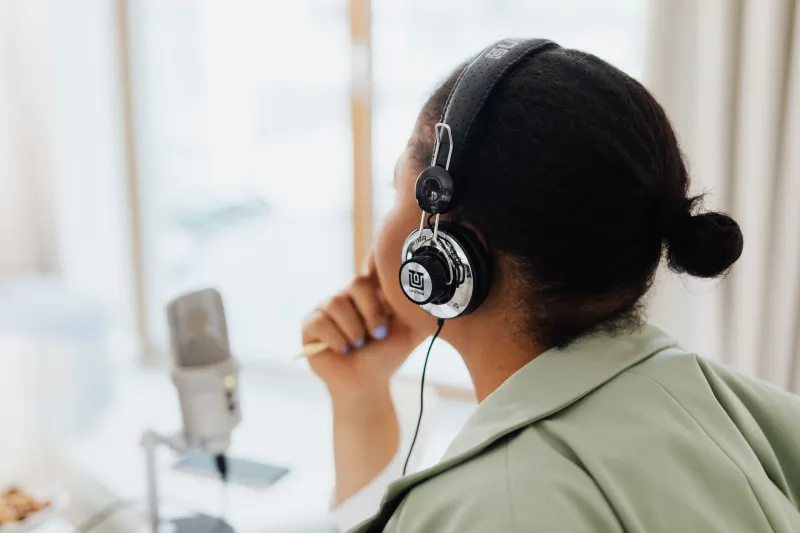
There's a version of the podcast origin story that gets told a lot. It usually involves a white guy with a laptop, a microphone, and a dream. Maybe there's a garage involved. Maybe a moment of inspiration. The story tends to be clean, entrepreneurial, cinematic — the kind of thing that makes for a good TED Talk intro.
That story is not wrong, exactly. It's just missing most of the people who actually did the work.
Before the Boom
Cast your mind back to the early 2000s. Broadband internet was still a novelty for a lot of households. iTunes hadn't launched a podcast directory yet — that happened in 2005. The word "podcasting" was barely a year old. And yet, in community radio stations, in home studios cobbled together from secondhand equipment, in the back rooms of universities and nonprofit newsrooms, a generation of audio professionals was already figuring out how to make the medium work.
Many of them came from backgrounds that mainstream media had never fully welcomed. Women who'd been passed over for on-air roles took their skills behind the glass. Black and Latino audio engineers who'd spent years in underfunded public radio markets started experimenting with digital distribution because the traditional pipeline had never really been open to them in the first place. Queer producers who understood the hunger for stories that didn't fit the network mold saw the internet as a door that nobody had thought to lock yet.
They weren't doing it for venture capital. Most of them were doing it because they loved sound, they loved story, and they'd run out of patience waiting for permission.
The Technical Work Nobody Mentions
Here's what the garage-and-a-dream narrative consistently leaves out: podcasting is hard. Not conceptually hard — the idea of recording your voice and putting it online is not complicated. But the execution, especially in those early years, required a level of technical knowledge that didn't come from enthusiasm alone.
Normalization, compression, noise reduction, room acoustics, file encoding, RSS feed architecture — these weren't things you just figured out over a weekend. The people who cracked these problems early, who developed workflows and templates and training materials that the whole industry would eventually standardize around, were working largely in obscurity.
Take the question of audio quality. Early podcast listeners tolerated a lot of hiss and echo because the content was worth it. But the engineers who started systematically solving those problems — who developed budget-friendly mic setups, who wrote guides on acoustic treatment for non-dedicated spaces, who figured out how to make a closet full of hanging clothes sound like a professional booth — were mostly sharing that knowledge for free on forums and in community workshops. Their solutions got absorbed into industry practice. Their names did not.
Several audio producers who came up in community radio during this period describe a familiar pattern: you develop a technique, you share it openly because that's the culture, and then six months later you see it described as best practice in an article that doesn't mention you or anyone like you.
The Invisible Infrastructure
Beyond individual technique, there's the question of infrastructure — the organizational and production frameworks that turned podcasting from a hobbyist experiment into something that could sustain serialized storytelling at scale.
The model of the limited-run narrative podcast series, the one that exploded into mainstream consciousness with Serial in 2014, didn't appear from nowhere. It was built on years of experimentation by producers — disproportionately women, disproportionately people of color — working at public radio stations, independent production companies, and nonprofit audio collectives. They'd been developing story structures, editorial workflows, and audience engagement strategies for years before the format got its cultural moment.
When that moment arrived, the money and the credit flowed toward platforms and personalities with existing media profiles and investor backing. The engineers and producers who'd laid the groundwork found themselves in a familiar position: technically essential, financially peripheral, and narratively invisible.
What Gets Called Innovation
There's a pattern worth naming here, because it shows up across industries and across history. Technical and creative innovation that happens in communities with less institutional power tends to get absorbed upward. It gets repackaged, rebranded, and resold. The people who did the original work get described, if they get described at all, as early adopters rather than originators.
In podcasting, this played out with particular clarity because the medium grew so fast. The window between "scrappy experiment" and "serious business" was maybe a decade. That's not a lot of time for attribution to catch up, especially when the people doing the attributing have financial incentives to emphasize the celebrity and the capital rather than the craft.
Some of the engineers and producers from those early years have found ways to build sustainable careers in the industry they helped create. Others have watched their techniques become standard practice while they remained on the financial margins. A few have spoken publicly about the gap between their contribution and their recognition. Most haven't, because the industry is small and the relationships are complicated and speaking up has costs.
The Sound Underneath the Sound
If you listen to a well-produced podcast today — the kind with clean audio, thoughtful pacing, and a sense of intimacy that makes you feel like the host is talking directly to you — you're hearing the product of decades of accumulated craft. Some of that craft came from well-funded production houses. A lot of it came from people working with limited resources and unlimited ingenuity, in communities that had every reason to distrust the mainstream media ecosystem and build something better.
The podcast industry likes to tell a story about democratization — about how anyone with a microphone can have a voice now. That part is real. What's less often acknowledged is that the democracy of the medium was built by specific people, with specific skills, who did specific work that made the whole thing possible.
Those people deserve more than a footnote. They deserve the chapter.