Healing Hands, Closed Doors: The Black Surgeons Who Rewrote Medicine Without Ever Getting a Seat at the Table
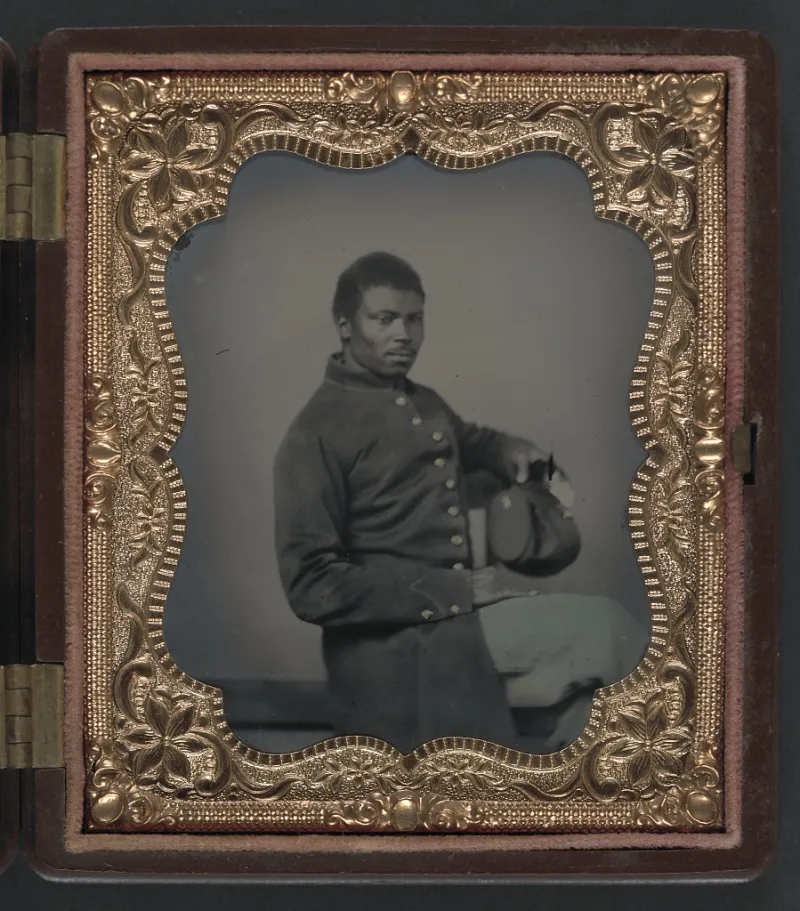
Photo: The Library of Congress, No restrictions, via Wikimedia Commons
There's a particular kind of cruelty in being brilliant at something and then being told you're not allowed to do it. For generations of Black physicians in America, that wasn't a metaphor — it was Tuesday.
From the late 1800s through the mid-twentieth century, African American surgeons and medical innovators were developing procedures that would eventually become standard practice in hospitals across the country. They were doing it without institutional support, without access to the journals that could have spread their work, and in many cases, without the hospital privileges that would have let them operate on patients at all. The contributions got absorbed into the broader body of medical knowledge. The names didn't.
The System Was Built to Exclude Them
To understand how this happened, you have to understand just how airtight the walls were. The American Medical Association didn't formally admit Black physicians as members until 1968. Major hospitals across the South — and plenty in the North — denied staff privileges to African American doctors well into the Civil Rights era. Medical schools either refused Black applicants outright or capped their enrollment at numbers so small they were essentially symbolic.
The National Medical Association, founded in 1895 specifically because Black doctors had nowhere else to go, became both a refuge and a parallel universe. It was a place where African American physicians could publish, present research, and build professional relationships. But it was also largely invisible to the white medical establishment, which meant that anything published in its journal had a much smaller chance of reaching the researchers and institutions that could amplify it.
When a Black surgeon developed a new technique or protocol, it often traveled through informal networks — passed along at NMA conferences, shared between colleagues at the small number of Black hospitals that existed — rather than through the prestigious publications and academic appointments that would have cemented a legacy.
Daniel Hale Williams and the Operation That Changed Everything
Most people who know anything about this history know the name Daniel Hale Williams, and for good reason. In 1893, he performed what is widely considered the first successful open-heart surgery at Provident Hospital in Chicago — a facility he founded specifically because Black medical professionals had no place to train or work in the city.
The patient, a man named James Cornish who had been stabbed in the chest, survived. Williams had sutured a wound to the pericardium — the sac surrounding the heart — a procedure so audacious for its time that it rewrote what anyone thought was possible in a surgical suite. He published a case report. The broader medical world took note, eventually.
But Williams spent much of his career navigating a system that wanted to use his talent without acknowledging his humanity. He was later appointed to Freedmen's Hospital in Washington, D.C., where he overhauled an institution that had been in serious decline. His administrative and surgical work there was transformative. The credit for various institutional improvements, however, had a way of drifting toward white colleagues and supervisors when the historical record was written up.
The Ones Who Didn't Even Get That Much
Williams at least got a paragraph in most medical history books. Plenty of others didn't.
Louis Tompkins Wright, a Harvard-trained surgeon who became one of the first Black physicians to be appointed to the staff of a major New York City hospital — Harlem Hospital, in 1919 — spent decades conducting research on cancer treatment and antibiotic therapies. His work on the use of aureomycin, one of the first broad-spectrum antibiotics, was genuinely groundbreaking. He was also a fierce and public opponent of racial segregation in medicine, which probably didn't help his chances of getting the kind of establishment recognition that would have made his name a household one.
Then there's Charles Drew, whose work on blood plasma storage and the development of blood banks literally saved thousands of lives during World War II. The Blood for Britain project and the American Red Cross blood bank program were built substantially on his research and organizational work. He was then reportedly forced out of the very program he helped create, in part because of policies that segregated blood donations by race — a scientifically baseless practice that Drew himself publicly criticized.
Drew died in 1950 after a car accident in North Carolina. For decades, a story circulated that he bled to death because a nearby white hospital refused to treat him. That specific account has been disputed by people who were present. But the irony of it — the man who built the modern blood bank being turned away from care — proved so resonant that it refused to die, which says something about how plausible it felt given everything else that was happening.
How Credit Actually Travels in Medicine
Here's the thing about medical knowledge: it doesn't usually arrive with a clear chain of custody. Techniques get adapted, refined, and passed along. By the time something becomes standard practice, it's often been filtered through so many hands and publications that pinning it to an origin point is genuinely difficult.
That ambiguity is a feature when the system works fairly. It becomes a bug — or really, a tool — when certain contributors are systematically excluded from the channels through which credit flows. If your work is published in a journal that the major research institutions don't subscribe to, and you're not permitted to present at the conferences where the important people gather, and you're not hired by the hospitals that train the next generation of surgeons, then your contribution can be absorbed and your name can be left behind without anyone having to make a conscious decision to steal anything.
It just disappears. Quietly. Efficiently.
What Got Left Behind
The erasure wasn't just unfair to the individuals involved. It had real costs for medicine itself.
When Black physicians were shut out of research institutions and academic hospitals, the questions they might have prioritized — questions shaped by their experiences treating underserved communities, by their understanding of how race and poverty intersected with health outcomes — often didn't get asked. The body of knowledge that got built was shaped by who was allowed to build it.
Some of that debt is still being paid today. Health disparities between Black and white Americans in areas like maternal mortality, cardiovascular care, and pain management have roots that trace directly back to a medical establishment that excluded Black practitioners and, often, treated Black patients as less deserving of aggressive intervention.
The surgeons in the margins weren't just victims of an unjust system. They were also, in a very real sense, the system's conscience — pushing against its limits, building alternatives, insisting on excellence in conditions designed to make excellence impossible.
Their techniques are still in use. Their names deserve to be too.