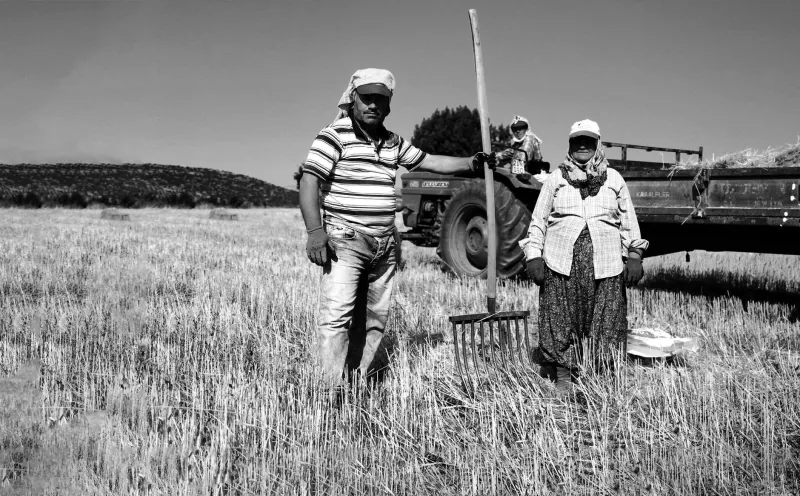
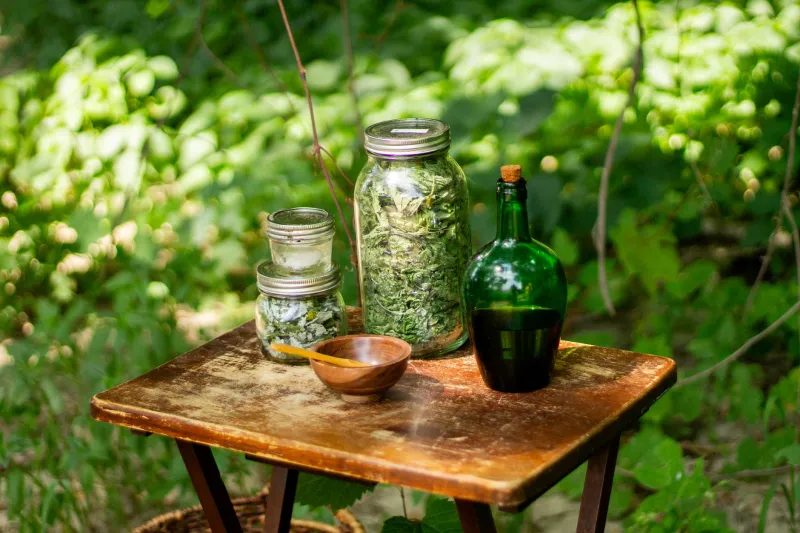
Grandma's Sauce, the Restaurant's Story
Let's start with a dish.
Say it's a mole — the kind that takes three days to make, that requires twenty-plus ingredients, that carries inside it a method passed from mother to daughter across generations in a specific region of Mexico. Now say that dish appears on a restaurant menu in, let's say, Los Angeles or Chicago or New York. The menu describes it as "inspired by traditional Oaxacan technique" or "a chef's interpretation of Southern Mexican flavors." The chef gets a profile in a food magazine. The restaurant gets a James Beard nomination. The dish becomes the thing everyone orders.
Now ask: where did the recipe come from? And who got paid?
The Kitchen That Never Gets Photographed
American food culture has a complicated relationship with the word "authentic." On one hand, it's used as a marketing term — a signal that whatever you're about to eat has roots deeper than a corporate focus group. On the other hand, the people who are actually the sources of that authenticity are often the last ones to benefit from its commercial value.
Immigrant women, in particular, occupy a strange position in this economy. Their cooking — the food they make at home, the food they sell from carts and small family-run spots, the recipes they carry in their heads because writing them down was never the point — is the raw material from which enormous amounts of American restaurant culture have been built. And yet the food media ecosystem, the fine dining world, and the celebrity chef industrial complex have historically been very good at celebrating the cuisine while remaining incurious about the specific human beings whose knowledge produced it.
This isn't a new observation. Food writers and cultural critics have been making versions of this argument for years. What's worth sitting with is how systematic the process is — how reliably the extraction happens, and how rarely the outcome looks different.
How the Recipe Travels
The path from a home kitchen to a restaurant menu doesn't always involve deliberate appropriation. Sometimes it's more ambient than that.
A chef eats at an immigrant-owned restaurant in a neighborhood that hasn't been gentrified yet. They taste something that stops them cold — a depth of flavor, a textural combination, a spice balance they've never encountered in their formal training. They come back. They ask questions. They're given answers, because hospitality is hospitality and the owners are proud of what they make. The chef goes home, experiments, develops "their take" on the dish. It ends up on their menu, refined for a clientele with different expectations and a much higher price tolerance.
The original restaurant might still be there, a few miles away, charging eight dollars for a plate. The chef's version costs thirty-two. The chef's version gets reviewed. The chef's version is what gets called innovative.
In other cases, the process is more direct. Restaurant investors looking for the next trend have been known to hire consultants specifically to identify underserved culinary traditions — meaning, cuisines that immigrant communities have been cooking for generations but that haven't yet been repackaged for upscale consumption. The knowledge-gathering phase of that process can look a lot like research. It can also look a lot like mining.
The Women at the Center
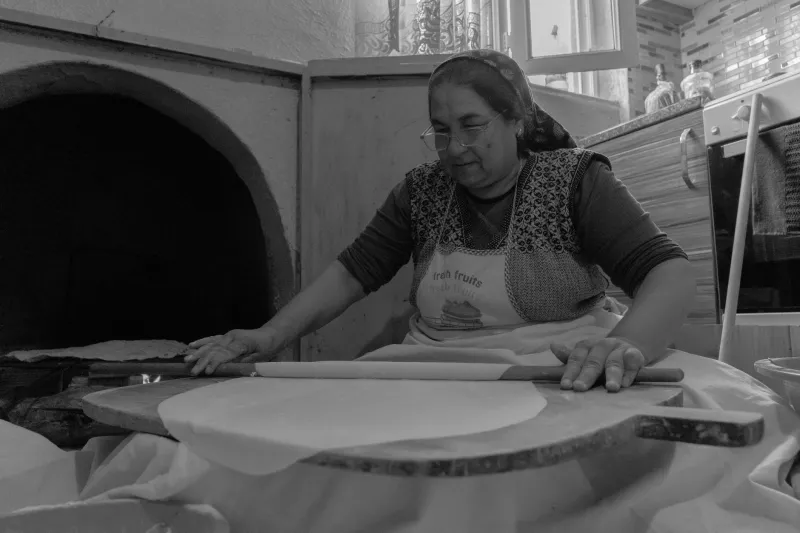
Within immigrant food communities, women are disproportionately the carriers of culinary knowledge. This is true across cultures and across generations. The mole recipe, the hand-pulled noodle technique, the fermentation process, the spice blend that doesn't have a written formula because it's calibrated by smell and memory — these things live in women's hands and women's heads.
Those women are also, as a general rule, among the least likely people to end up with a publicist, a cookbook deal, or a profile in a national food publication. They may not have legal status. They may not speak English fluently. They may be working sixty hours a week in circumstances that don't leave much room for building a media presence. The structural barriers between their knowledge and its recognition are substantial and not accidental.
What they do have, in many cases, is community recognition. Within their neighborhoods, their churches, their family networks, everyone knows who makes the best tamales, who taught half the local restaurant owners how to properly season a broth, whose recipe ended up on a menu across town without so much as a phone call. That knowledge circulates, but it circulates quietly, in spaces that food media hasn't historically paid much attention to.
The Premium Markup on Someone Else's Tradition
There's a specific economic irony embedded in this story that deserves direct attention: the communities whose culinary traditions are being adapted and upscaled are often then priced out of accessing those adaptations.
A family that has been making a particular regional dish for three generations, selling it affordably in their community, watches a version of that dish become trendy at a price point that assumes a completely different income bracket. The culture that generated the food becomes a marketing asset for a business model that has no structural relationship with that culture.
This is not a hypothetical. It's a pattern that has played out with Vietnamese food, with West African food, with various regional Mexican cuisines, with the food of South Asian immigrant communities, with the cooking traditions of Caribbean families. The cycle is consistent enough that it starts to look less like coincidence and more like an industry norm.
What Recognition Could Look Like
Some chefs and restaurateurs have made genuine efforts to change this dynamic. Explicit credit on menus — naming the person or community whose recipe informed a dish — is one approach. Revenue-sharing arrangements with source communities is another, rarer, and more meaningful one. Hiring directly from the communities whose food traditions you're drawing on, and paying fairly, is another.
None of these solutions are standard practice. They're exceptions, notable precisely because they're uncommon. The default is still extraction with attribution that stops at "traditional" or "inspired by" — language that gestures at a source without naming one.
The women who hold this knowledge are not waiting for the food industry to develop a conscience. Many of them are building their own platforms — through social media, through community-supported cooking projects, through the small restaurants and food businesses they run on their own terms. The cuisine they carry is not going anywhere.
But the credit — and the money — has somewhere to go other than where it's been going. That part just requires deciding to do it differently.